Wednesday, August 25, 2010

Quaker Perspectives Wanted

Wess Daniels in Gathering in Light  mentions that Jez Smith from the British Quaker magazine “The Friend” is looking for a variety of Quaker perspectives on a few questions. He asks us to read this and consider helping him out-

Just what is the World Family of Friends? From 3-5 September Quakers from Britain Yearly Meeting, Ireland Yearly Meeting, Aotearoa/New Zealand Yearly Meeting and Philadelphia Yearly Meeting will be exploring this question through worship, workshops, activities and fellowship at Woodbrooke Quaker Study Centre in Birmingham, UK.
The participating Friends will be bringing their own connections to many of the Yearly Meetings and worship groups around the world. But I would like to add some more perspectives to share with participants and to share online as a resource for other Friends who want to explore this starter question. To facilitate this, I would appreciate it if anyone would take the time to answer the following questions:
  • a. Why are you a Quaker?
  • b. How are you a Quaker?
  • c. Please give an example of how a Meeting for Worship is conducted in your tradition.
Ideally please keep to a word count of around 800-1,000 but any length of response will be accepted. Please also give me your name and Meeting details. A photo would be great too. Email to jez@friendswitness.org If you prefer to video your response, or have photos online that would help with your response, please email links to uploaded material to the same address. Initial deadline for material for the course is 2 September 2010 but earlier submissions appreciated!


Here's my response:


Why am I a Quaker?

I am a Quaker because when I was in high school I went to county-wide Youth For Christ meetings at Garden Grove Friends Church in Southern California.  Fast-forwarding a few years, I found myself looking for a church to attend and while browsing through the phone book came across Garden Grove Friends.  I was curious about what a "Friends Church" might be since I had grown up in various Baptist churches. 

There I discovered something very different from what I had grown up with.  The forms of worship in this meeting were familiar because it was programmed worship, but the people I encountered there knew God in a way that was new to me.  God was present.  Jesus was teaching his people.  So I stayed.  As I discovered other things about Friends - our way of doing business, our understanding of ministry and the testimony of equality - I realized that I belonged among Friends.

How am I a Quaker?
I am a Quaker who continues to be amazed at how the first generation of Friends broke through the forms and structures of the church of their day and discovered a way of living almost totally in the presence of Jesus Christ. 
I am a Quaker in a programmed meeting who enjoys and gains from unprogrammed times of worship. 
I am a Quaker who is part of a stream of people extending back to biblical times who have experienced the revelation of God in many ways and forms.  I am a Quaker who learns from George Fox, Margaret Fell, William Penn, Robert Barclay, John Woolman, Elias Hicks, Joseph John Gurney, Rufus Jones, Elton Trueblood and the many contemporary voices expressing Quaker faith.
I am a Quaker who understands Quaker faith as an expression of Christian faith.

Worship in my tradition-
I enjoy being part of the programmed tradition of Friends.  Singing, group prayer and preaching are valuable elements of worship for me. We have times of unstructured waiting as well, and I personally would like to move more in this direction.

How would you respond?

Wednesday, August 18, 2010

When Did Jesus Become God?

Putting Jesus in His Place: The Case for the Deity of Christ
A basic defining issue among Christians is the question of who Jesus is.  The Nicene Creed describes Jesus as
the only Son of God,
eternally begotten of the Father,
God from God, Light from Light,
true God from true God,
begotten, not made,
one in Being with the Father.1
The creed describes Jesus as unique, eternal, true God and one in being with the Father.
One of the widely circulated ideas about this description is that it was late in coming.  The argument is that the first generation of Christians did not have this understanding of Jesus, but that it was developed in the second and third centuries in order to either consolidate church power, justify burning heretics, or encourage military expeditions (or all three).

Putting Jesus in His Place: The Case for the Deity of Christ by Robert M. Bowman, Jr. and J. Ed Komoszewski argues that, based on what the first generation of Jesus' followers have written, they understood Jesus in the way he is described in the Nicene creed.  They argue convincingly that "the deity of Christ is . . . a major theme throughout the New Testament."


The book is a very readable and thorough treatment.  The material is organized around an acronym developed by one of the authors - "Jesus shares the HANDS of God:
Honors:  Jesus shares the honors due to God.
Attributes:  Jesus shares the attributes of God.
Names:  Jesus shares the names of God.
Deeds:  Jesus shares in the deeds that God does.
Seat:  Jesus shares the seat of God's throne."

The authors cite numerous biblical passages and discuss various issues of interpretation in making their case.  They do a good job of dealing with contemporary biblical scholarship and provide a wealth of references for further study in the endnotes and bibliography.

There are two questions that can be raised about this argument for the deity of Christ-

First, can we rely on the New Testament texts to know what Jesus did and what his followers believed?  I think we can.  There are many resources that present good arguments for the reliability of the material we have.  One recent example is Jesus and the Eyewitnesses: The Gospels As Eyewitness Testimony by Richard Bauckham.

The other question has to do with whether those first Christians were even able to give a clear picture of what Jesus was about.  Perhaps they were confused or self-deluded (or, in some scenarios, even intentionally misleading).  A New Testament introduction such as An Introduction to the New Testament by D. A. Carson and Douglas J. Moo is a good place to start in sorting out those issues.

Putting Jesus in His Place: The Case for the Deity of Christ  is a very helpful approach to understanding who Jesus is.
Thursday, July 1, 2010

Who Are We? (Preparing for Western Yearly Meeting - 2010)

 About a year ago I wrote about "Preparing for Yearly Meeting".  Here is the 2010 installment:

Western Yearly Meeting is working through a process of self-identity.  It is often expressed as a simple question:  "Who are we?"  This attempt at self-identity has been going on for at least 15 years.  In that time there has been some confusion, anger, and heat. Sometimes there has been positive conversation as well.

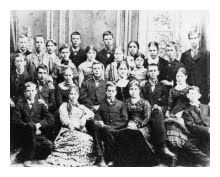
Who are we?  One suggestion is that the Yearly Meeting is simply the collective identity of the people who constitute it.  If we can blend together our collection of leadings, understandings and personalities in some way, we can identify who we are.  But this only gives us a snapshot, like those group pictures that are taken on anniversaries and other special occasions.  A snapshot only shows us a single point in time and only shows what the camera lens can see.  There is a story behind that single picture but eventually the snapshot becomes all that is known of that story.

A Yearly Meeting is a group of people that has developed an identity over many points in time as they work alongside each other.  In order to identify who we are, we need to look at the story behind the snapshot. 


Any organized group has a history.  There are founders who bring a group together for identifiable reasons.  Over time, new issues come up and the original founding reasons are adapted, changed or added to.   I'm in the Plainfield Kiwanis Club and the Kiwanis motto is "For the children of the world."  Kiwanis began in 1914 as a social club for young businessmen, with no apparent concern for the children of the world.  Understanding how it changed helps me know what Kiwanis is all about.  An organization cannot know itself without knowing its history.

Structures are also created and adapted, changed or added to.  There is a tendency to see structure as negative, to suggest that all of that organization as getting in the way of doing things.  In fact, groups develop structure in order to get things done.  An organization needs some level of organization!  True, sometimes structures outlive their usefulness and there is often resistance to structuring things in new ways.  But to know who we are we need to understand the ways our history and structures interact with each other. 
And all organizations have some common belief structure that shapes the group.  The common element in the "Kiwanis belief system" is that we are doing things for the children of the world.  That shapes our activities.  If  I started urging the club to stop sending all our hard-earned elephant ear money to Riley Hospital for Children, some of my fellow Kiwanians would take me aside and suggest that I might need to find a different service club to join.  As a faith-centered organization, Western Yearly Meeting has described its belief system in some detail in Faith and Practice.  It is a belief system that has been shaped by history, is expressed in our structures and  shapes our ways of doing things.

The answer to the question of who we are is found in this intersection of beliefs, structures and history. 
  
For me, the answer to the question begins by taking seriously the faith that was agreed to in the Yearly Meeting Faith and Practice.  The "Essential Truths" are an excellent statement of a distinctively Christian faith.  We add to that our distintively Quaker history that is filled with people whose lives were transformed by that faith, and we begin to catch a glimpse of what we could be.  And then we need to examine our structures and ask some tough questions about how they connect with our beliefs and our history. 

pastor Bill

Wednesday, June 16, 2010

Summer Reading

Past, Present and Future Church:

 The Concurrence and Unanimity of The People Called Quakers edited with introductions by Patrick J. Burns and T.H.S. Wallace.  A new edition of Quaker sermons collected by Andrew Sowle and originally published in 1694.Movements begun by charismatic leaders like George Fox begin to transform as they enter their second generation.  Many of these sermons are by second generation Friends.  As I read these, I sense that the fire is still there.


The Journal of Elias Hicks in a new edition edited by Paul Buckley.  Paul Buckley has gone to Hicks' original manuscripts for this restored edition.

To understand Friends today we have to deal with Elias Hicks.  Gnostic heretic or defender of the true faith?  Read his own account of his journey and discover for yourself.


Jesus Manifesto: Restoring the Supremacy and Sovereignty of Jesus Christ by Leonard Sweet and Frank Viola.  A call to restore Jesus to the heart of faith, arguing that everything else flows from this.

You can read a brief version of the manifesto at leonardsweet.com.


The common thread is the Jesus Question: 
"Who do you say that I am?"


Wednesday, May 19, 2010

Instant Sermon!


Three connected points that all start with the same letter.  Can't get any easier than that!


(I-77 north in Virginia, headed to West Virginia)


Tuesday, April 27, 2010

Another Poem by William Stafford


How the Real bible Is Written
by William Stafford


Once we painted our house and went into it.
Today, after years, I remember that color
under the new paint now old.
I look out of the windows dangerously
and begin to know more. Now when I
walk through this town there are
too many turns before the turn
I need. Listen, birds and cicadas
still trying to tell me surface things:
I have learned how the paint goes on,
and then other things--how the real Bible is
written, downward through the pages,
carved, hacked, and molded, like the faces
of saints or the planks ripped aside
by steady centuries of weather, deeper than
dust, under the moles, caught by the
inspiration in an old badger's shoulder
that bores for grizzled secrets in the ground.


from The Way It Is: New & Selected Poems

Tuesday, April 20, 2010

"If the Church Were Christian" by Philip Gulley


In the introductory chapter of If the Church Were Christian, Philip Gulley says something very important. "The question for Christians is whether the church reflects the priorities of Jesus". Identifying those priorities is essential for the life of the church. Gulley goes on to identify the priorities of Jesus as "less a codified doctrine or creed and more an approach to life that emphasizes grace, is always on the side of human dignity, is always devoted to our spiritual growth and moral evolution, and is always committed to the ongoing search for truth, even if that search leads us away from institutional Christianity."

He then presents in ten chapters propositions that describe how a church would live out those values:

  • -Jesus would be a model for living rather than an object of worship.

  • -Affirming our potential would be more important than condemning our brokenness.

  • -Reconciliation would be valued over judgment.

  • -Gracious behavior would be more important than right belief.

  • -Inviting questions would be valued more than supplying answers.

  • -Encouraging personal exploration would be more important than communal uniformity.

  • -Meeting needs would be more important than maintaining institutions.
  • -Peace would be more important than power.

  • -It would care more about love and less about sex.

  • -This life would be more important than the afterlife.


The Right Question - A Nebulous Answer

Gulley asks the right question. If the church is following Jesus it should be reflecting the priorities of Jesus. Gulley presents his vision of those priorities and gives many examples of people and churches that have followed those priorities well and not so well.

But how do we know the priorities of Jesus? Gulley argues that we cannot accurately know the true intentions of Jesus. In his view, the stories of Jesus are to some extent creations of the early church and there is no universal agreement on what those stories mean, so we cannot assume a universal understanding of what it means to be a Christian. Our understanding comes from our own experience, which is limited at best. There is an existential truth to the stories about Jesus that when combined with our experience and understanding, can give us some idea of the priorities of Jesus.

Gulley's priorities seem to be developed out of some of the stories about Jesus, his interactions with the theologies he grew up with and his various experiences with other people, both good and bad, along the way. There is no clear explanation of why these priorities are chosen over others. Some of them are more directly connected to Jesus by referring to some of the stories about Jesus, but others are just tossed out there. When a story about Jesus contradicts Gulley's argument it is explained away as an addition or a misunderstanding. For example, when Jesus makes judgmental statements about some pharisees it is seen as possibly an antisemitic addition by early Christians rather than anything Jesus would say.

But it is not a book of theology. It is a book about a journey. As such, it leaves some questions unanswered and some things lack clear definition.

An Either-Or World

As Gulley describes the values being lived out in the church, he does a better job of telling us what those values are not. He sees other expressions of Christianity as failing because they insist on believing specific things about Jesus. Creeds and doctrine get in the way of following the priorities of Jesus. In each chapter he shares stories and gives examples of people who have lived out their faith in wrong and hurtful ways, often because they are holding on to a particular set of beliefs. The implication is that if we let go of those beliefs, we will be rid of our wrong and hurtful ways of doing things.

It is an "either-or" world with little room in the middle. In the introduction he tells of a woman who describes herself as a Christian in general cultural terms: "If I say I am a Christian, I am." The only alternative he sees to this are those who "would have us examining one another closely, judging who among us is fit to bear that name, attempting to construct a definition suitable to all, which is both undesirable and impossible." Either one or the other. But there are other alternatives. There are many who hold to a traditional understanding of Christianity and are not judgmental, uncaring, and fixated on institutions.

The succeeding chapters set up more "either-or" choices with limited recognition of other ways of seeing things. Chapter 1 describes our choice as seeing Jesus either as a model for living or as an object of worship. Gulley describes his early religious training and his unquestioning acceptance of Jesus as divine. He then tells of his rethinking and rejection of that understanding of Jesus. It is true that if Jesus is not divine, then worshiping him would be a foolish thing. But worshiping Jesus as divine and following him as an example are not mutually exclusive. This has been part of being a Christian since Paul wrote in his letter to the Philippians, "Your attitude should be the same as that of Christ Jesus . . . ." (Philippians 2:5)

Two Questions

I am left with two basic questions about Gulley's argument:

  • -Why keep Jesus? If the traditional and cultural understandings of Jesus keep people from recognizing the true priorities of Jesus, wouldn't it be easier to leave Jesus out? The priorities Gulley presents are pursued apart from Jesus by many. What is there about Jesus that needs to be held on to?

  • -If the church is as irredeemable as described in this book, why bother with the church at all? In seventeenth century England the first generation of Quakers saw a church that had lost its way and they responded by establisheing new structures and ways of doing things that were not tied to the existing church. They worshiped and followed Jesus in a way that impacted their world far beyond their numbers.


I agree that the basic question for Christians is whether the church is reflecting the priorities of Jesus and I agree that people have done many terrible things in the name of the church while claiming to be followers of Jesus. But the solution is not to reduce a rich and vibrant faith to a set of feel-good platitudes.


Bill

Wednesday, April 14, 2010

"Everything Stops For a Minute"


Why the Sun Comes up

by William Stafford

To be ready again if they find an owl, crows
choose any old tree before dawn and hold a convention
where they practice their outrage routine. "Let's elect
someone." "No, no! Forget it." They
see how many crows can dance on a limb.
"Hey, listen to this one." One old crow
flaps away off and looks toward the east. In that
lonely blackness God begins to speak
in a silence beyond all that moves. Delighted
wings move close and almost touch each other.
Everything stops for a minute, and the sun rises.


The Way It Is: New & Selected Poems

Tuesday, March 30, 2010

Walking out of the Grave


I have been reading parts of The Power of the Lord is Over All, edited by T. Canby Jones. It is a collection of the pastoral letters of George Fox. As the Friends movement spread across England and around the world in the 17th century, George Fox wrote many letters of advice and encouragement.


In a letter from 1675, George Fox writes about the reality of the resurrection of Jesus and how our sharing in that resurrection changes everything. I want to share these thoughts with you as we observe the Easter season and celebrate Resurrection Sunday.


For Fox and other Friends, resurrection wasn't a future hope in the "sweet by and by." We are risen with Christ in the present. Life in Christ is a present reality, unfolding into the future. For Friends, the Good News is that we are already dead! We died when we entered into this new life in Jesus and are now living in the power demonstrated by the Resurrection of Christ.


George Fox writes:

- - - - - - - - -

"They that are risen with Christ...let such put on the new Man, which .. is created in Righteousness and Holiness, and live. [They] have their part or lot in the first Resurrection ... and the second death has no power over them; but they live in him, that has Power over death, hell and the grave ....


Therefore, all you who are the first fruits to God, in the Resurrection by Jesus Christ, who know him, the Resurrection and the Life ... are translated from darkness to Light and into the Kingdom of his dear Son .. that you may show forth righteous and holy fruits, so that you may glorify God, the Father of our Lord Jesus Christ, may be as lights to the dark world and salt to season the unsavory .... You cannot bring forth this holy, righteous and pure fruit unto God, but as you abide in Christ Jesus, the Truth, 'who did descend and ascend far above all principalities, thrones and dominions, that he might have the preeminence above all' (Col 1:16-18), and that you in him might live above all unto God....


So in him, who is your Lord, walk, who is the Amen and there the living can praise God together. The living gather in the Name of Jesus, the Name of him 'who was dead, is alive again and lives forevermore .. the First and the Last'(Rev 1:11 & 18)."

- - - - - - - - -

George Fox personally experienced the transformation that comes when we put on "the new Man," the living presence of Jesus, and live in the power of his resurrection. And he encourages us to be lights to a dark world, salt to season the unsavory, and people who bring forth holy, righteous and pure fruit.


How do we do that? George Fox describes it very simply: "So in him, who is your Lord, walk . . . ."


We walk with Jesus out of the grave and into a new life, "translated from darkness to Light into the Kingdom of His dear Son."


Walking with Jesus,

Bill

Tuesday, December 29, 2009

Cultivating Angels


Another Christmas has come and gone. We gathered with families and friends, exchanged gifts and shared about our lives, our years and our hopes. We listened again to the story of the birth of Jesus, whether from the mouth of Linus in "A Charlie Brown Christmas," from the pulpit of a meeting house or at home in our devotional times.

Angels are a big part of that story. An angel tells Mary of an unexpected birth. In a dream, an angel answers the confusion and anxiety Joseph must have felt. Shepherds hear the news from a heavenly host of angels. And an angel warns Joseph and Mary to leave before Herod can find and kill the baby Jesus.

Are angels still speaking to us today, or are they something we only find in the Bible?

To understand the question we need to understand what an angel is. When we think of angels we often picture white, glowing persons with wings. The angel's voice is usually filtered through a reverberation chamber and the angels visit is accompanied by various special effects involving lights and flying.

A New Testament angel is different. An angel in the New Testament is literally a "messenger." It is a word directly connected to "gospel" or "good news." Angels are the messengers who bring the good news of God's offer of deliverance. These messengers of God are an important part of the revelation of God through Jesus and appear throughout the ministry of Jesus. But there is no mention of wings, lights or booming voices.

Let's look at another messenger from God--

The gospel of John begins telling the story of Jesus at a different place than the other gospels:
In the beginning was the Word, and the Word was with God, and the Word was God. He was with God in the beginning. Through him all things were made; without him nothing was made that has been made. In him was life, and that life was the light of men. The light shines in the darkness, but the darkness has not understood it. John 1:1-5 (NIV)
And, in common with the other gospels there is a messenger, but he is an "angel" of a different sort:
There came a man who was sent from God; his name was John. He came as a witness to testify concerning that light, so that through him all men might believe. He himself was not the light; he came only as a witness to the light. The true light that gives light to every man was coming into the world. John 1:6-9 (NIV)
John, son of Elizabeth and Zechariah, a cousin of Jesus, is the messenger delivering good news.

Are angels still speaking to us today? Yes! God brings messengers in many forms into our lives to bring us good news and reveal to us God's deliverance. Like Mary, Joseph, the shephers and the Magi, we need to be listening for those messages.

We need to cultivate "angels." As we identify those around us who are delivering news that is from God and as we develop our listening skills, we discover God speaking to us as well.

I am thankful for the messengers in my life.

Keep listening,
pastor Bill

Thursday, August 27, 2009

Grieving a Loss


Brent Bill, in Holy Ordinary, posted some thoughts on events in Western Yearly Meeting. I encourage you to read his post, and then my response here.

Yes, Brent, what's going on among us in Western is not pretty.

I want to suggest another way of seeing the current events in the Yearly Meeting.

When I was called to pastor at Plainfield, the search committee sent me a copy of Faith & Practice and asked me to indicate my agreement with it. The “Faith and Thought” section is a description of orthodox Gurneyite Quakerism with roots in the Richmond Declaration (it is online at: http://westernym.net/F&PPartII.htm#FaithandThought). I felt at home with it. The Yearly Meeting also made other decisions at the time that seemed to reinforce this basic understanding of who God is, who Jesus is, and how faith is experienced.

As I became part of Western I discovered different understandings of Faith & Practice. One of the more popular is the “Chinese menu” approach. In a traditional Chinese restaurant, you pick an item from “column a” and maybe two items from “column b,” and if your party is big enough they throw in the egg roll. Faith & Practice for some is a set of options to choose from, depending on one's theological preferences. The decision during Yearly Meeting sessions was, in many people's eyes, a de facto endorsement of Faith & Practice as “Chinese Menu.” Faith & Practice is not intended to be a “paper Pope” but it seemed to no longer even be a good description of who we are.

There are some sore losers, but most of the people I am talking to who are unhappy are grieving a loss. There is a feeling that we have let go of an important part of who we are. This is not a new thing among Friends. We have a long history of defining ourselves by what we let go of. Some things, like dress codes, are let go of because they get in the way of being good news for all. Sometimes, though Friends have let go of things at the heart of who we are and that are essential parts of that good news.

For me, integrity in the Yearly Meeting needs to include being who we claim to be. If our description of who we are is not accurate, then the action of integrity is to propose changing it. Instead, I hear people defining and redefining words and phrases in order to “proof-text” a preference. If a person wants to see a Yearly Meeting organized around theological diversity or any other basic principle, then that proposal needs to be presented to the body for action. Then Quaker process can do its work.

About the meeting on Sunday, August 30. I think it is very appropriate for people who are grieving a loss to gather together to look for a way forward in that loss, and that is my understanding of what is going on. Last year, some people in the Central area also gathered in meetings to look for a way forward in affirming who they were in Western Yearly Meeting. At the time I did not hear anybody calling that a threat to the integrity and authority of the Yearly Meeting.

The quotation from Edgar Dunstan challenges us to “define, with such clarity as we can reach, precisely what it is that Friends of this generation have to say that is not, as we believe, being said effectively by others.” As I see it, that is what is going on here.

Bill

Tuesday, July 14, 2009

Honey-Glazed Carrots and Vegetable Stew

I have been talking with people about preparing for the upcoming yearly meeting.  I also received a copy of a minute from Indianapolis First Friends.  I am anticipating other minutes, expressions and opportunities for discussion in the next few weeks

It seems to me that part of what is going on involves different ways of seeing.

Western Yearly Meeting is a faith centered organization.  It is a faith that has changed form since its beginnings in the seventeenth century.  There have been disagreements and separations as various Friends chose to emphasize some elements of their faith and let go of others.  This is a process of development, growth and change that continues today.

The current stress within the Yearly Meeting involves two significantly different ways of seeing our faith.

I am not fond of cooked carrots, but I do enjoy honey-glazed carrots.  Good honey glazed carrots have a honey flavored sweetness that still allows the flavor of the carrots to come through.  There also needs to be a slight saltiness or tartness to set off the sweetness, sometimes from the addition of a little mustard.  While there can be variations in the recipe, there are some basics that need to be there for the dish to be identified as honey-glazed carrots.  And if too many other things are added, it begins to look like something other than honey-glazed carrots

Carrots are also often used as a basic part of vegetable stew.  Good vegetable stew will be seasoned in ways to maximize the flavors of the ingredients but there is a lot of flexibility in what those ingredients can be.  Some people like more potatoes.  Others prefer more exotic ingredients.  I like a little garlic thrown in.  My wife would much rather have onions.  Some would always add tomatoes and others would never add tomatoes.  Some prefer more pepper or spice.  A good stew has a variety of flavors to be explored.

My understanding of who we are as Western Yearly Meeting is like honey-glazed carrots.  There are some basic elements that identify who we are and that I see expressed in the Western Yearly Meeting Faith and Practice.  Two of those elements that make up who we are an understanding that Jesus is uniquely divine and that his sacrificial death uniquely saves.  There are variations in emphasis and differences in expression, but for me these basic elements identify who we are.

Othes see us as vegetable stew.  Faith and Practice is a collection of ingredients to select from or add to.  I would suggest that the June 2009 "Indianapolis Monthly Meeting Minute Regarding Theological Differences between Meetings and Individuals within WYM" expresses this way of understanding who we are (the minute is not available online).  This minute affirms that the basic ingredient is Jesus ("We take our relationship with Jesus seriously, and affirm that being a Christian entails being like-minded with Him as we strive to take on His nature in our daily lives").  The minute goes on to argue that, "Since spiritual revelation is an ongoing, inward process and not a result of static dogma, we do not strive for uniformity of belief, but rather we center ourselves upon the guidance of Divine Love as we listen together for God's leading,"  with a goal of becoming "an ever more broad and living example of vibrant theological diversity." 

So where is the conflict?  Isn't it just a matter of preference?  After all, combining the honey-glazed carrots and the vegetable stew would combine flavors in new ways. And the stew would still be stew.

But the honey-glazed carrots would no longer be identifiable. 

That is the heart of my concern and the concern of many others.  What identifies us as Western Yearly Meeting?

Bill

Thursday, July 9, 2009

Preparing for Yearly Meeting


Western Yearly Meeting Sessions begin on Friday, July 31. The Yearly Meeting Program Committee has put together a schedule of worship, workshops and times for fellowship along with the usual business sessions. The program for children and youth has been expanded. I encourage you to attend as much of Yearly Meeting as possible. Registration information is available at the Meeting House.

Keep our Yearly Meeting sessions in prayer. Yearly Meeting is not just a business meeting. It is, in Friends terms, “a meeting for worship with a concern for business.” Pray for Jim Crew, Clerk of the Yearly Meeting, that he will be sensitive to Lord’s leading as he prepares for the meetings and as he presides. Pray for all the others in leadership as well.

There will be one item of business that has already drawn a lot of interest and generated a lot of discussion. The Yearly Meeting Board on Christian Ministries and Evangelism is recommending that Phil Gulley's recording as a minister with WYM be rescinded because of substantial disunity with WYM Faith and Practice. This is the culmination of a process that began six years ago when concerns were raised about Phil's theology as expressed in If Grace is True, written by Phil Gulley and Jim Mulholland. This minute is scheduled to be presented on Saturday, August 1, in the morning business session.

Unfortunately, over the years this process seems to have generated more heat than light. There has been anger and name-calling. Motives on all sides have been questioned. This is all the more reason that we need to be praying for wisdom, patience and God's grace on all who are involved in this issue.

I want to share a few of my thoughts on this issue as I prepare for Yearly Meeting:

Some see this as a personality clash between people who just don't like each other or who can't seem to get along. This is not true. I know from my involvement that the people at the heart of this issue deeply care for each other.

Some see it as a power struggle – a battle for the control of the Yearly Meeting. While it is true that we all deal with control issues on some level in our lives, I have not met anybody in this process whose goal is to “run the Yearly Meeting.”

As I see it, the immediate issue has grown out of some some deeper questions about the nature of a Yearly Meeting, and about Western Yearly Meeting in particular:

  • Is the Yearly Meeting primarily an administrative body concerned with taking care of property, managing endowments and running programs, or is it a body with some degree of authority over constituent meetings and issues of faith? Historically, Yearly Meetings have had a fair amount of authority but beginning in the twentieth century that understanding began to change. Meeting autonomy has become a more important value. Is this a good thing?

  • Where does the “Faith and Thought” portion of the WYM Faith and Practice fit in? Is it a description of who we are? Is it a set of faith statements that we pick and choose from? Do we want to have a common expression of faith? There has always been a tendency to emphasize some parts and pay less attention to others. Our contemporary desire for personal autonomy runs counter to the idea of a common faith.

  • Is the Yearly Meeting structured for ministry or are we just structured for maintenance? There is a lot of good ministry going but a lot of resources, time and energy are spent maintaining the organization.


Connected to all of these questions is the bigger question of community. What kind of community is Western Yearly Meeting? Communities can choose to organize themselves around many things -- common beliefs, a common history, common tasks, or common needs. What kind of community are we and what are we organized around?

These are challenging questions. I'd like to hear what you have to say.

Wait, pray, trust

pastor Bill

Wednesday, June 24, 2009

Another Great Junior High Camp


I had a great time as a a Junior High Camp counselor at Quaker Haven last week. As you can see, the setting on Dewart Lake is terrific. (And we had great weather to enjoy the lake)


We had 79 girls and 35 boys. Here they are waiting to get into the dining hall to enjoy the outstanding food. (The good news - I only gained two pounds)


Group worship times were loud and meaningful. Cabin worship times were quiet and meaningful.


I observed some very creative water balloon activity. This basketball size one set a record.


And of course the Camp Directors are always trying out new games. This last picture is one they called "Thrive." It was a combination of capture-the-flag, a water balloon fight, and a watermelon hunt. (I don't think we ever found the watermelons)


A lot of junior high kids met Jesus last week in a lot of different ways. And it sure feels good to be part of that.

Bill

Thursday, June 4, 2009

My Other Blog


Counsel to the Christian-Traveller: also Meditations & Experiences
by William Shewen is a new book from Inner Light Books.

William Shewen was a first generation Quaker, a pin maker and his house was one of the first meeting places of Friends south of the Thames River in London.

“Meditations and Experiences” is the largest part of the book. Shewen presents 70 short thoughts, possibly shorter versions of messages given in worship, that describe the Quaker faith as he experienced it. He invites the reader to enter into the same experience and know the satisfaction and fulfillment that he has enjoyed.

I was struck by his directness, his intensity, and the way the Bible is infused in his writing.

I have started blogging his "Meditations & Experiences" at It Is A Precious Thing.

Music Pick of the Week

While I'm working, I often have one of my Pandora stations going and I get to hear music I never would have come across otherwise. One morning Pandora started playing "Mercy Seat" by Anonymous 4. I was stopped dead in my tracks by one of the most beautiful things I have ever heard. "Mercy Seat" is a traditional Sacred Harp song that is very moving by itself (watch this video). Anonymous 4 makes it transcendent.

Here's a sample of Mercy-Seat by Anonymous 4 courtesy of Amazon.com


Tuesday, May 26, 2009

Picture Of The Week

Our lives are complete. We have done something very few Hoosiers have done. On our way to visit my brother in Ohio, we made a side trip north of Richmond and climbed to the top of Hoosier Hill, the highest point in Indiana. (Actually, "climbed" may be too strong a word. We "walked" thirty feet from the dirt road.)


I recorded our accomplishment in the official logbook. Later that day we drove near the Ohio highpoint, but we were running late and will save that adventure for another day.

Wednesday, April 8, 2009

Friday, April 3, 2009

Do Without

On the afternoon of the 2008 Olympic opening ceremonies, our television died.  It died of old age.  It was 15 years old and had gone through three moves.  The tuner has been fried for 10 years (somebody spilled a liquid that dripped into the back).

We decided we would save up for a new television.  Not another 27 inch heavyweight hulk, but a really BIG flat-panel High Def Wonder.  We figured we could get one by Christmas.

We went to a nephew's wedding in North Carolina in September, the car needed major front-end work in November, and we have a hefty tax payment coming up.  The High Def Wonder got put on the back burner.

And then, about a month ago, I began to think the unthinkable -- Since we've gone six months without a television, maybe we don't need one.  I tried to think about anything that I felt I missed out on in those six months and realized that even if there was something I might have wanted to watch, I didn't miss it.  There are many better ways to keep up on current events than watching television.  And a lot of my interests are the kinds of things that get ignored by television.

What finally pushed me over the edge was "Use it Up, Wear it Out, Make it Do, or Do Without," a blog post by Russell Arben Fox.  He writes,

You want to be environmentally conscious and help conserve what resources we have left? Well, then quit buying all that expensive crap that gets shoveled out at us by the Powers That Be, crap that’ll have to thrown away as soon as you’re lured in by the next model car/range oven/purse/sneakers/lifestyle renovation/electronic gizmo. Resist change, cut back, slow down! Wear that sports jacket for another year! Exercise at home! Garden and eat your own food! Not everyone can do all of this; indeed, given how pervasively the habits of acquisition, competition, and consumption are threaded through most of our daily routines, most of us can’t do most of it. But here and there, we can and should make a stand, however wired our professions or home lives may be.

Our television seems a good place to take a stand.  Media is the engine of consumerism in our society.  The television culture turns everything and everybody into a commodity (but that's another post).

"We will do without a television."  There, I said it.  Let's see how it goes.

Unresolved Issues:
Colin Firth - Kathy really enjoys the five hour BBC Pride and Prejudice that features Colin Firth as the best D'arcy of all time.  Is there some way we can still have Colin Firth in our lives?

DVDs and Videotapes - we have a lot of them.  Do we invite ourselves over to the neighbor's house to watch our classic Fred Astaire movies?

Still working it out,
Bill

Wednesday, March 18, 2009

Silence and Listening


I was able to go to the  Monterey Jazz Festival for several years in the early 1970s.  It was a great opportunity to hear amazing jazz artists, wonderful vocalists and up-and-coming performers.  There were five shows spread out over 3 days, winding up with the blues show on Sunday afternoon.

I was relaxing and watching television on the Monday evening following the Jazz Festival and realized that I was not listening to the words in what I was watching -- I was only tuned in to the music.  Three days of listening to great music had changed the way I was hearing things! 

I recalled this experience during the time of quiet waiting in the Friends in Fellowship worship group last Sunday evening.  Brent had raised the question of whether the group should continue.  Some people responded to the question and then we shifted into a time of quiet.

I came to realize that I was there for the silence.  Extended silence changes the way I hear things, in the same way that three days of world-class jazz changed the way I heard things. One of the ways quiet waiting transforms us is that it changes the way we listen.

And to extend the idea--
The significance of any form of worship is in the way it changes the way we hear and see and experience things when we leave that time of worship.  I am blessed by our worship on Sunday mornings, with hymns, a choir, prayers and preaching.  My Quaker understanding is that those outward elements of worship are there to help me discover my relationship to Jesus Christ in new and fresh ways, not as ends in themselves.  Otherwise it is only music and words. 

In the same way silence is not an end in itself, but another opportunity to explore my relationship to Jesus.  I hear the words shared in the silence within a larger context that includes the group, the world and the living presence of Jesus.  And the way I listen is changed.

Bill